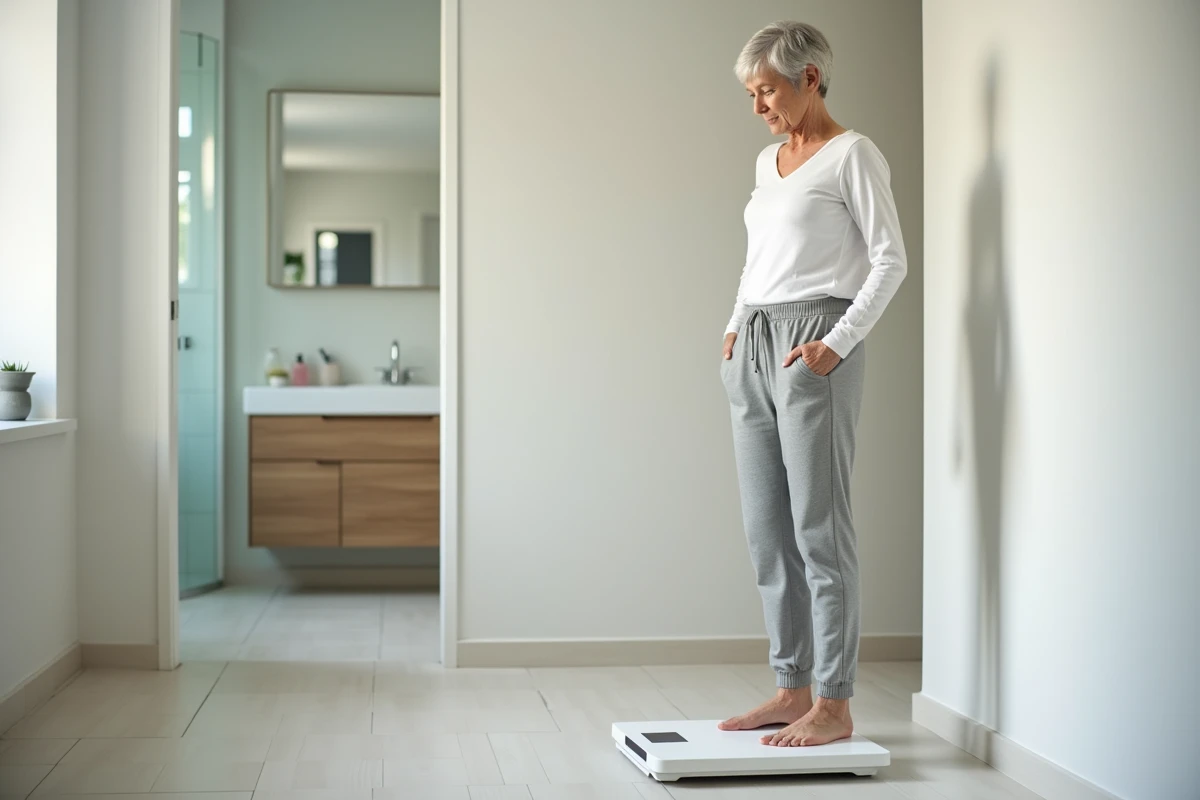
After 60, the weight displayed on the scale tells less and less about what is happening in the body. Two people of the same weight can have very different body compositions: one with preserved muscle mass, the other beginning to lose muscle. This is where a body composition scale becomes particularly relevant for seniors, providing access to data that a simple weighing scale ignores.
Have you ever noticed that a pair of pants becomes looser at the waist while the scale hasn’t budged? This is a classic sign of the gradual replacement of muscle with fat. The weight remains stable, but the body composition changes. To detect this shift, you need a tool capable of distinguishing muscle mass, fat mass, and body water.
The goal of a body composition scale designed for seniors is not to aim for a perfect number. It is to observe a trend over several weeks and to react before muscle loss becomes a mobility or autonomy issue. Today, there are models designed to easily track muscle mass without complex manipulation.
Segmental Analysis: The Criterion Seniors Should Check First
Most consumer body composition scales display an overall percentage of muscle mass. This single figure has a flaw: it masks imbalances between the upper and lower body.
In seniors, muscle loss does not affect all areas uniformly. The legs often lose muscle faster than the trunk. This is an early signal of sarcopenia, the gradual loss of muscle mass and strength associated with aging.
Recent guides recommend that those over 60 prioritize models with segmental analysis of arms, trunk, and legs. This feature allows for the detection of localized loss before it affects walking or balance. A stable overall percentage can hide a decline in muscle mass in the lower limbs.

In practical terms, during the measurement, the electrical current passes through each segment of the body separately. The device then calculates the resistance specific to each area. The more water a tissue contains (like muscle), the less resistance it opposes. Fat, on the other hand, hinders the passage of current more.
How Impedance Measurement Works for Body Composition
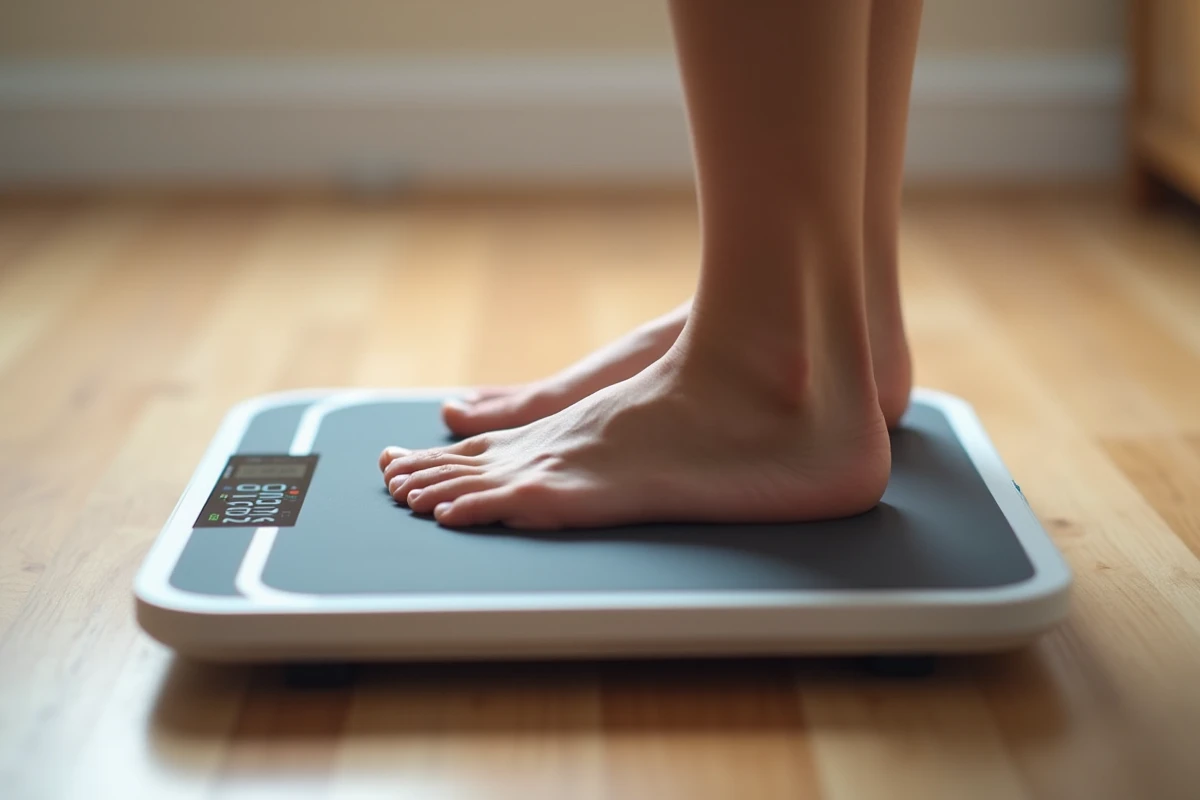
The principle is simple. You step barefoot onto the scale. Electrodes located beneath the surface send a very low-intensity electrical current, completely imperceptible and safe. This current passes through the body’s tissues.
Muscle, rich in water, conducts the current well. Fat, low in water, opposes greater resistance. The device measures this resistance (called impedance) and correlates it with your personal data: age, height, sex, physical activity level.
From these parameters, the scale calculates several indicators:
- Muscle mass, expressed in kilograms or as a percentage of total weight
- Fat mass, which informs about fat tissue reserves
- Body hydration rate, a marker often overlooked in seniors
- Body mass index (BMI), automatically calculated from weight and height
These values taken in isolation have little meaning. It is their evolution over several weeks that matters.
Reliable Weighing Conditions for Seniors
A body composition scale does not provide laboratory results. Its reliability depends heavily on the conditions under which it is used. For seniors, a few simple habits are enough to obtain consistent measurements from week to week.
Weigh yourself always at the same time of day, ideally in the morning on an empty stomach, after using the restroom. Hydration fluctuates greatly throughout the day, and these variations distort the impedance reading.
Barefoot, dry, on a hard, flat surface. A mat or carpet absorbs vibrations and can alter contact with the electrodes. The room temperature should not vary significantly from one weighing to another.
Why this rigor? Because the difference in muscle mass from one month to the next hinges on small variations. If the measurement conditions change each time, the fluctuations mask the true trend.
Recommended Frequency
Weighing once a week is more than sufficient. Weighing daily generates noise in the data: water retention, meals from the previous day, recent physical activity. Monthly tracking of muscle mass remains the most informative rhythm for detecting the onset of loss.
Muscle Mass in Seniors: What the Scale Alone Doesn’t Tell
The body composition scale measures body composition. It does not measure strength or the functional quality of muscle. A senior can display a correct muscle mass while having lost power in their legs.
This is why health professionals often combine impedance measurement with simple physical capacity tests. Tracking on a scale remains a useful first filter, not a diagnosis.
A point often underestimated: rapid weight loss in a senior can signal muscle loss, not just fat loss. Recent studies on restrictive diets in those over 60 show that without sufficient protein intake and without strength training, caloric restriction leads to muscle loss parallel to fat loss.
Conversely, seniors engaging in regular physical activity several times a week manage to maintain their muscle mass well beyond 70. The scale then visually confirms this maintenance, week after week.
What Criteria to Consider for a Suitable Model
- A backlit display with large enough numbers to be read without bending
- A multi-user memory capacity, convenient for couples
- The presence of segmental analysis to monitor the legs separately from the trunk
- Connectivity with a mobile app if you wish to visualize the trend curves
- A wide, non-slip platform for stable mounting and dismounting
Tracking muscle mass with a body composition scale does not replace a complete medical assessment. However, it provides a concrete, accessible reference at home to keep an eye on the evolution of body composition. Combined with regular physical activity and a protein-rich diet, this tool becomes a discreet ally against the loss of autonomy.