A smoker calls to make an appointment, asks three questions about how the session will go, then hangs up because the practitioner could not explain the difference between a cold auricular laser and a simple LED lamp. This kind of situation is found in most practices that start without structured training.
The anti-addiction laser therapy using the MC77 method is based on precise protocols for auricular stimulation with low-level laser. Technical mastery makes the difference between a credible practitioner and a rough operator.
Laser Auricular Reflexology: The Technical Gesture That Conditions Everything Else
Before discussing a business plan or certification, we must talk about the gesture. The MC77 method relies on auricular reflexology, a mapping of points located on the outer ear. Each point corresponds to an area of the nervous system involved in the addiction circuit (nicotine, alcohol, cannabis).
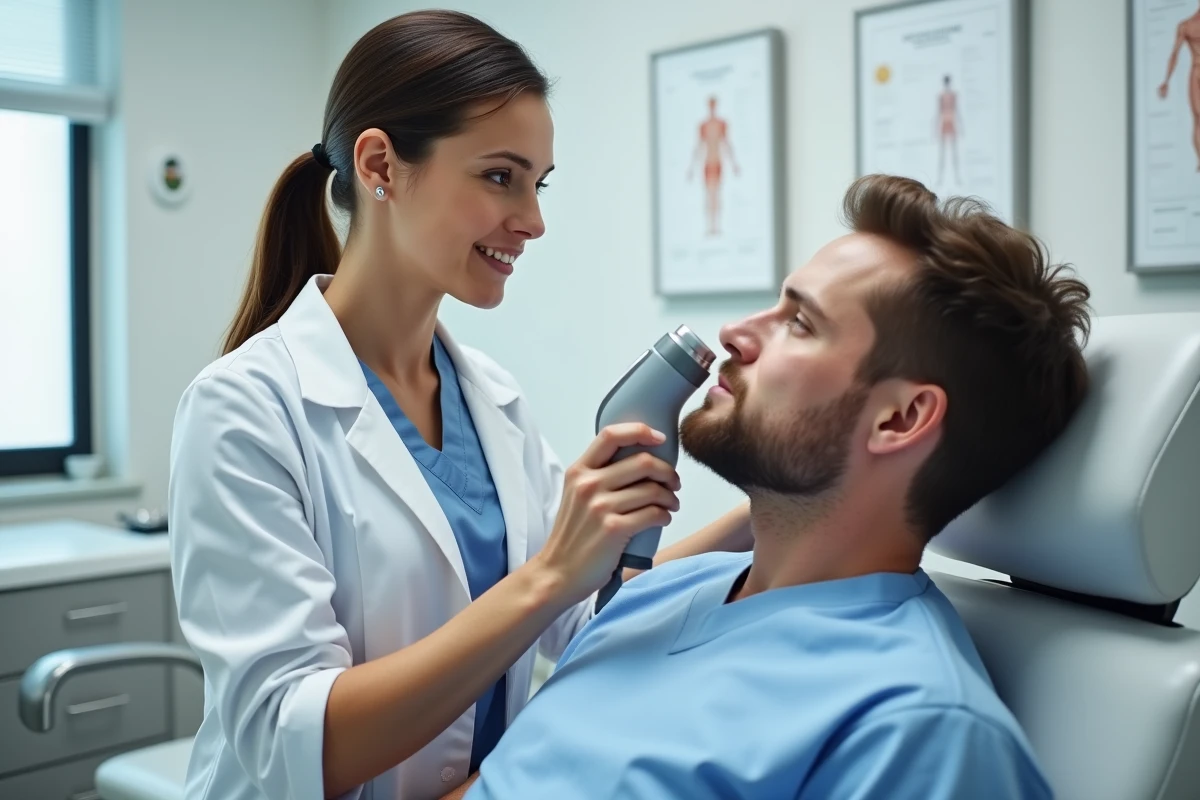
The low-level laser (or cold laser) stimulates these points without needles and without pain. The precision of the targeting conditions the result. A deviation of a few millimeters on the auricular pavilion can render the session ineffective.
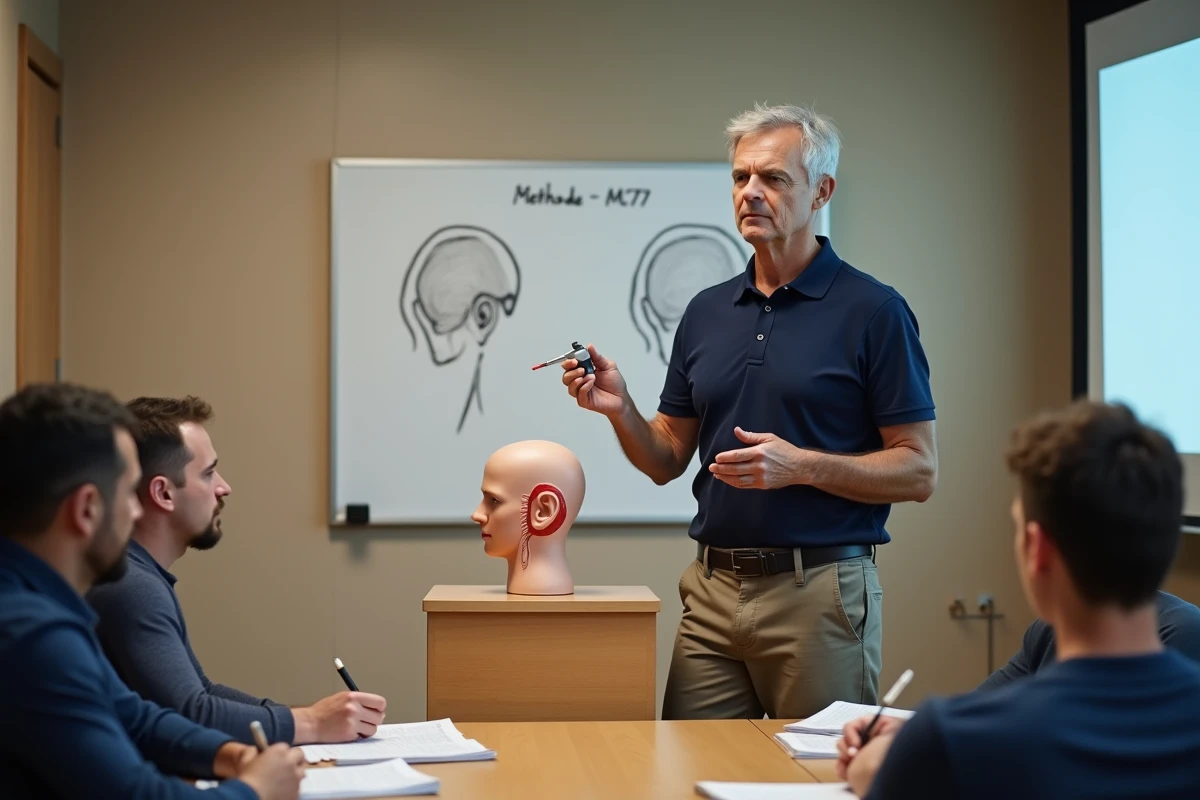
Training with an experienced practitioner changes the game. In-person MC77 training includes workshops on real patients, where you learn to identify auricular areas by palpation before applying the beam.
This practical approach distinguishes the method from many 100% online courses that are limited to anatomical diagrams. To deepen this approach, one can train in laser therapy with the MC77 method through a program that combines theory and practical application.
Regulatory Framework for Anti-Addiction Lasers in France
Opening a laser therapy practice without knowing the legal framework exposes one to serious complications. Since 2023, the ANSM reminds that lasers used for therapeutic purposes must be examined in light of Regulation (EU) 2017/745 on medical devices, even when the operator presents them as related to well-being.
In practice, this means that the practice’s communication cannot promise to “cure” an addiction. The terms used on a website, a Google listing, or a flyer are scrutinized. A trained practitioner knows how to formulate their offer around support for withdrawal, without claiming an unproven medical benefit.
Professional Civil Liability and Insurance
Specialized brokers in complementary medicine report a stricter selection on techniques using a laser. Insurers now exclude laser protocols that do not comply with the European MDR regulation. Before signing a lease for a premises, one must check that the professional liability insurance explicitly covers the practice of anti-addiction auricular laser.
Feedback varies on this point depending on the companies: some accept certified MC77 practitioners without difficulty, while others require a detailed description of the protocols. Preparing a clear technical file speeds up the process.
MC77 Withdrawal Protocols: Tobacco, Alcohol, Cannabis
The MC77 training is not limited to tobacco withdrawal. The protocols cover several types of addictions, each with its specificities regarding auricular targeting and number of sessions.
- Tobacco Withdrawal: the most requested protocol by patients, often treated in one to a few sessions depending on the level of nicotine dependence. Stimulation targets the points related to stress management and the reward circuit.
- Alcohol Withdrawal: the auricular points differ partially from those for tobacco. The practitioner must also integrate complementary support (hypnosis, dietary supplements) because physical dependence on alcohol presents specific risks.
- Cannabis and Other Substances Withdrawal: the protocol adapts the auricular mapping to the consumption profile. The training emphasizes the initial assessment of the patient to guide or refuse inappropriate care.
This versatility broadens the potential patient base of the practice. A practitioner who only offers tobacco cessation misses out on a significant portion of the demand.

Complementary Skills for Practicing in a Laser Therapy Office
The laser gesture alone is not enough to run a practice. MC77 training includes modules that go beyond pure technique.
Hypnosis and Patient Support
Combining laser stimulation with Ericksonian hypnosis techniques enhances patient support during and after the session. Hypnosis helps address the behavioral component of addiction, while the laser acts on the physiological component. The MC77 Group offers specific training in hypnotherapy, accessible in addition to the laser curriculum.
Nutrition and Weight Management Post-Withdrawal
Weight gain after quitting smoking remains one of the primary concerns for patients. A practitioner capable of offering basic nutritional follow-up, or at least personalized dietary recommendations, retains their clientele and reduces the risk of relapse related to frustration.
Opening an Anti-Addiction Laser Practice: Field Constraints
The choice of location, the layout of the treatment room, the laser equipment to acquire, and the signage compliant with regulations: these practical steps are rarely detailed in competing training programs.
- The laser must meet optical safety standards (laser class suitable for auricular use, with no risk to the eyes of the practitioner and the patient).
- The treatment room requires appropriate lighting for identifying auricular points, a reclining chair, and a quiet space for the hypnosis phase if it is integrated into the protocol.
- Mandatory displays (legal mentions, practitioner qualifications, absence of therapeutic promises) must be prepared before opening.
A well-prepared practice in advance avoids weeks lost in regularization after opening. The MC77 method provides trained practitioners with a documented practice framework that facilitates procedures with insurers and local authorities.
The market for support in withdrawal through auricular laser continues to structure itself. Practitioners who combine solid technical training, knowledge of the European regulatory framework, and complementary skills in hypnosis or nutrition are positioning themselves in a niche where demand still far exceeds the supply of qualified practices.