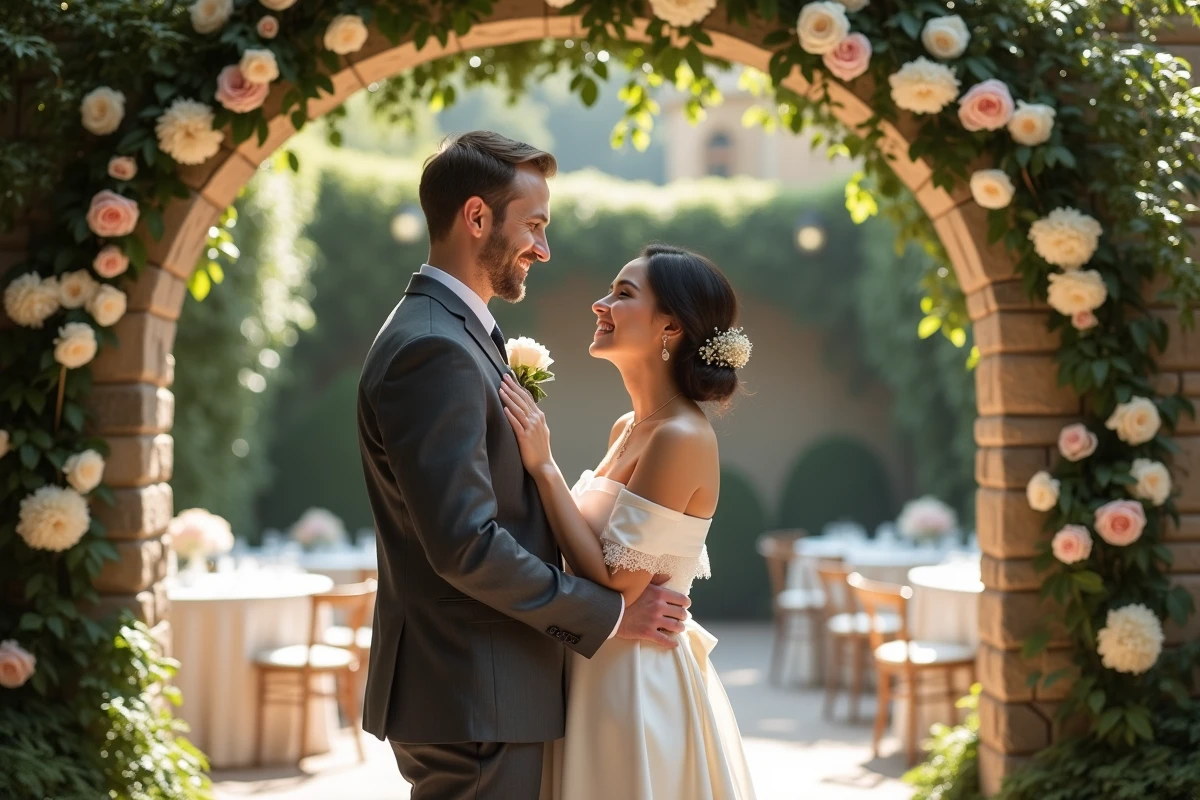
Organizing a wedding this year means navigating between desires for personalization and very concrete constraints that few couples anticipate. Noise regulations, traceability of flowers, new video capture formats: wedding trends are no longer just about choosing between rustic and bohemian. They touch on logistics, budget, and sometimes even legal matters.
Regulations and outdoor weddings: what’s changing for receptions
Do you dream of a fireworks display to end the evening? Several prefectures have tightened their regulations in recent years. Specific permits, reduced time slots, and bans during dry periods complicate matters.
The same observation applies to light drone shows. The Directorate General of Civil Aviation reminds us of the obligation to declare drone flights in populated areas, with height and time restrictions for private events. A drone service provider must prove their declaration before any booking.
On the sound ambiance side, cities like Paris and Nice are applying nighttime noise rules more strictly for reception venues. The result: many couples are turning to audio headset solutions (silent disco) or more intimate after-parties after a certain hour. Before signing with a venue, check the authorized hours for amplified music with the town hall.
By browsing the news on Mariage Service, you will find concrete feedback from couples facing these logistical questions.
Eco-friendly wedding: going beyond talk for concrete choices
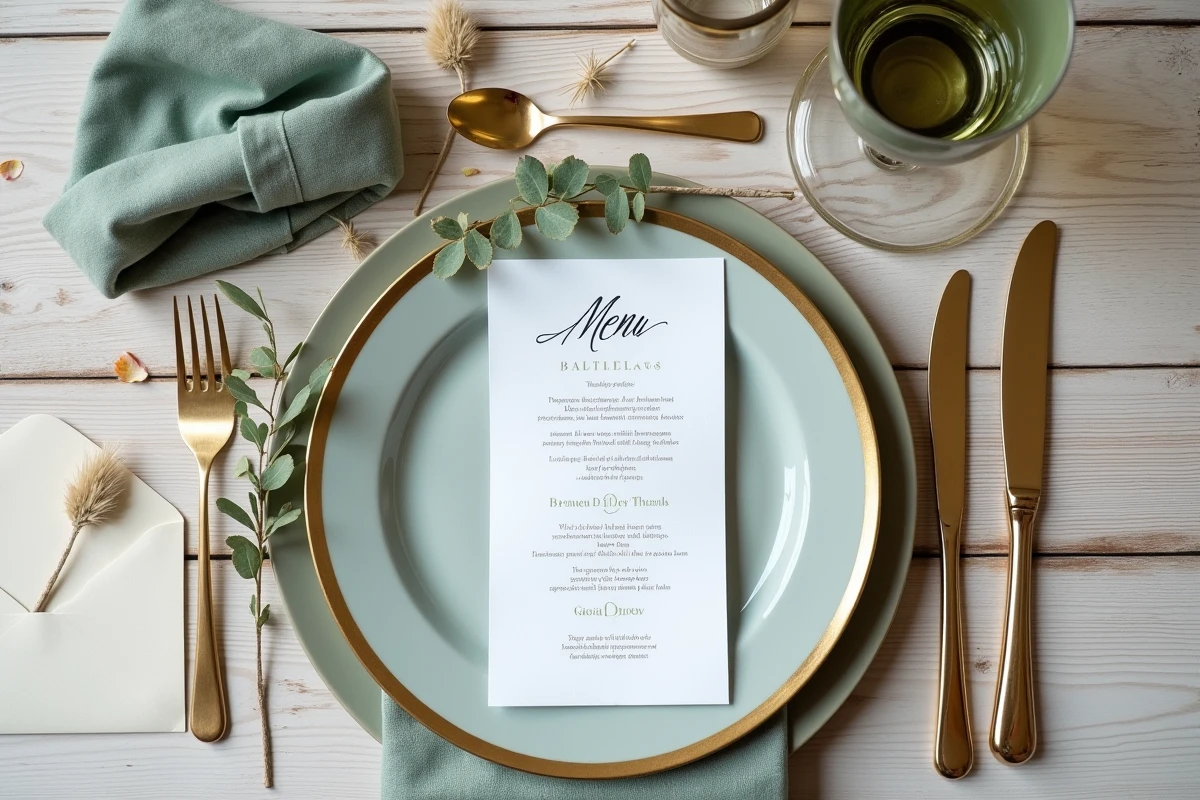
The idea of an eco-friendly wedding has been circulating for several years, but guides published by ADEME and local authorities now push for a precise requirement: traceability. Origin of flowers, seasonality of arrangements, short circuits for catering. These are no longer “bonus” options; they have become a selection criterion for suppliers for a growing number of couples.
Food waste is the most impactful aspect of a reception. Adapting the meal format (modular buffet rather than a fixed five-course menu) helps reduce leftovers without compromising quality. Some caterers now offer to redistribute surplus food through local associations.
Why does this choice matter so much? Because floral decoration and the meal together represent a major part of the budget. Choosing seasonal flowers grown in France instead of air-freighted peonies changes both the cost and the carbon footprint of the day.
- Ask your florist for the exact origin of each variety and prioritize local producers.
- Require the caterer to provide a written commitment on the number of guests adjustable up to a week before the big day.
- Consider reusable containers for the wine reception rather than disposable cups.
Wedding content creator: a new kind of photo-video service provider
Recently, a new profession has emerged in French weddings: the dedicated content creator. Inspired by American practices, this provider does not replace the photographer or videographer. Their role is to produce short content designed for social media, in real-time.
Specifically, the content creator films vertical sequences during the preparation, ceremony, and evening. Couples receive edited clips in the days that follow, sometimes even on the evening of the wedding for stories. The format is radically different from the classic wedding film (cinematic, horizontal, delivered several weeks later).
Before booking, ask the provider three questions:
- What equipment do they use (stabilized smartphone, dedicated camera, external microphone)?
- How many deliverable contents are included in the package, and within what timeframe?
- Do they coordinate with the photographer to avoid positioning duplicates?
A poorly coordinated content creator with the photographer can ruin shots. Plan a joint meeting between the two providers at least a month before the wedding.
Choosing the reception venue: criteria couples overlook

The reception venue concentrates the majority of discussions. Guest capacity, charm of the setting, distance for guests: these criteria come naturally. Others, less obvious, deserve special attention.
Check if the venue imposes an exclusive caterer or allows an outside provider. This constraint weighs on the budget and the freedom to customize the menu. A venue that mandates its caterer sometimes charges a high corkage fee if you wish to bring your own wines.
The weather contingency plan is another underestimated angle. For an outdoor wedding, ask if the venue has a covered space capable of accommodating all seated guests, and not just a tent for the cocktail hour.
Finally, inquire about the actual accessibility of the site: parking, access for people with reduced mobility, phone network. A beautiful venue but without network complicates coordination between providers on the big day and prevents your guests from sharing the event live.
Reception details that leave a mark on guests
Guests do not remember the number of dishes. They remember a personalized attention, a moment of surprise, or an unexpected sensory detail. A memorable wedding relies on two or three strong details rather than an accumulation of decorative accessories.
A simple example: replacing the traditional printed seating plan with an interactive support (key wall, scented board associating each table with a fragrance) creates a moment of collective discovery. The cost remains modest, but the effect on the guests’ experience is disproportionate.
The same logic applies to music. Rather than multiplying styles on a generic playlist, identify three key moments of the evening (entrance of the newlyweds, first dance, bouquet toss) and entrust them to a DJ or musician briefed on your specific tastes. The rest of the evening can run on an automated selection without perceived quality loss.
Organizing a wedding this year requires balancing desires with practical realities that magazines rarely address. Local regulations, supplier traceability, and coordination among the day-of participants weigh as heavily as the choice of theme or dress. Each decision made in advance with rigor frees up mental space to enjoy the moment when the day arrives.