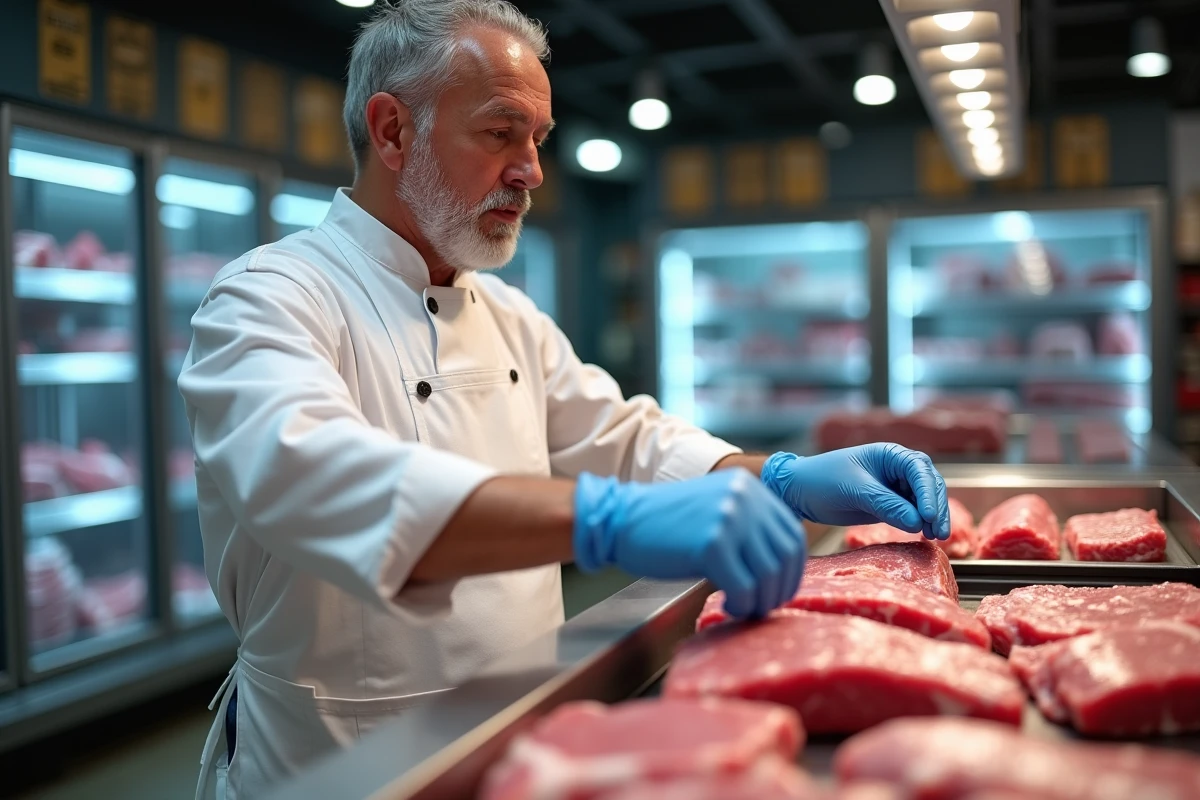
The meat sold at Lidl regularly raises questions about its true origin. Between the company’s CSR commitments, the labels on the packaging, and the concerns raised by French farmers, the signals can sometimes be contradictory. This article examines what the available data allows us to verify about the traceability of Lidl meat, and what remains unclear.
Mandatory labeling and voluntary mentions on Lidl meat
European regulations have required origin labeling for beef sold in supermarkets for several years. Regulation (EU) 2017/625, known as the “Official Controls Package,” has strengthened controls and penalties in case of discrepancies between the displayed origin and the actual origin. Lidl, like any distributor, is required to comply with this framework.
In practice, trays of beef must indicate the country of birth, rearing, and slaughter of the animal. For pork and poultry, the obligation pertains to the place of rearing and slaughter. The mentions “French Beef” or “French Pork” mean that the animal was born, raised, and slaughtered in France.
On the other hand, Lidl-specific mentions, such as “Origin Pyrenees” on certain ranges of minced beef, are a voluntary commercial choice. They are not governed by the same regulations as official logos. To delve deeper into Lidl meat origin on Cuisine Gratuite, it is essential to distinguish these two levels of information.
French meat and imported meat at Lidl: what CSR reports show
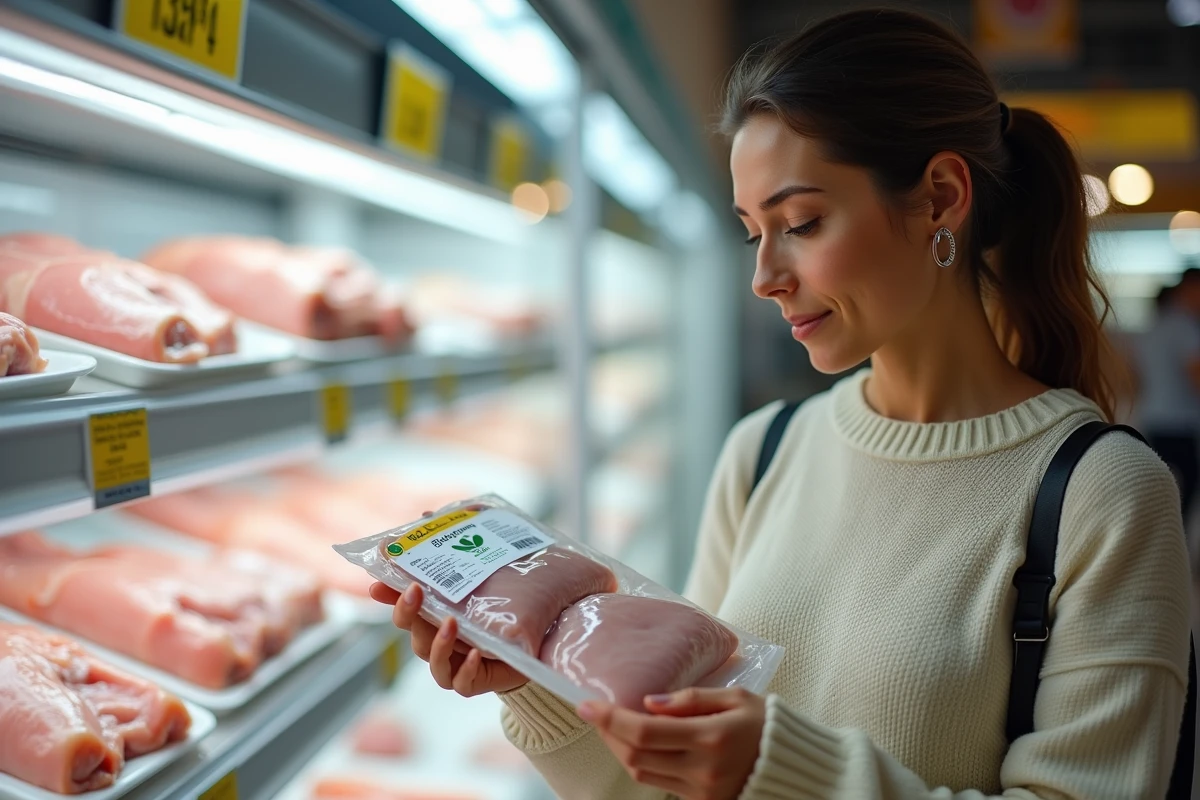
Since 2023, Lidl France has been publishing in its CSR reports consolidated information on the origin of meats sold under its own brand. The company distinguishes meats from 100% French animals (born, raised, and slaughtered on the territory) from those imported from the European Union or third countries.
This partial transparency allows for tracking over time the share of genuinely French meats on the shelves. However, it remains aggregated: the reports do not detail product by product, nor store by store.
| Criterion | Lidl brand meat (France) | Imported meat from the EU or third countries |
|---|---|---|
| Mandatory origin mention | Born, raised, slaughtered in France | Country of rearing and slaughter indicated |
| CSR transparency | Consolidated data in the annual report | Less detail by sector |
| Possible labels | VBF, VPF, Label Rouge, Organic | European labels (EU organic, etc.) |
| Regulatory control | DGAL, Regulation (EU) 2017/625 | Same regulatory framework |
This table shows that the regulatory framework is identical, but that the level of detail varies depending on the type of sourcing.
Actual composition of minced steaks and organic meat at Lidl
A senior technician in dietetics, Miodrag Borges, publicly analyzed several references of minced meat and burgers sold at Lidl under the “Origin Pyrenees” range. His analysis focused on the ingredient list and the nutritional composition displayed on the packaging.
The main finding: some trays of organic minced meat display a very short ingredient list, sometimes reduced to the meat itself, without additives or preservatives. This result is explained by the European organic framework, which prohibits most additives in certified meat products.
In contrast, some “classic” burgers contain additional ingredients (salt, spices, vegetable fibers). The difference in composition between an organic minced steak and a non-organic burger is significant, even within the same aisle.
- An organic minced steak from Lidl may contain only beef, without any additives, thanks to the European organic specifications.
- A non-organic burger may include salt, spices, fibers, or starch, which alters the nutritional profile of the product.
- The mention “pure beef” on a minced steak guarantees the absence of mixing with other animal species, but not the absence of additives.
Reading the label remains the only reliable way to verify the actual composition of a meat product. The organic logo says nothing about the geographical origin, and the origin logo says nothing about the composition.
Imported meat and tensions with French farmers
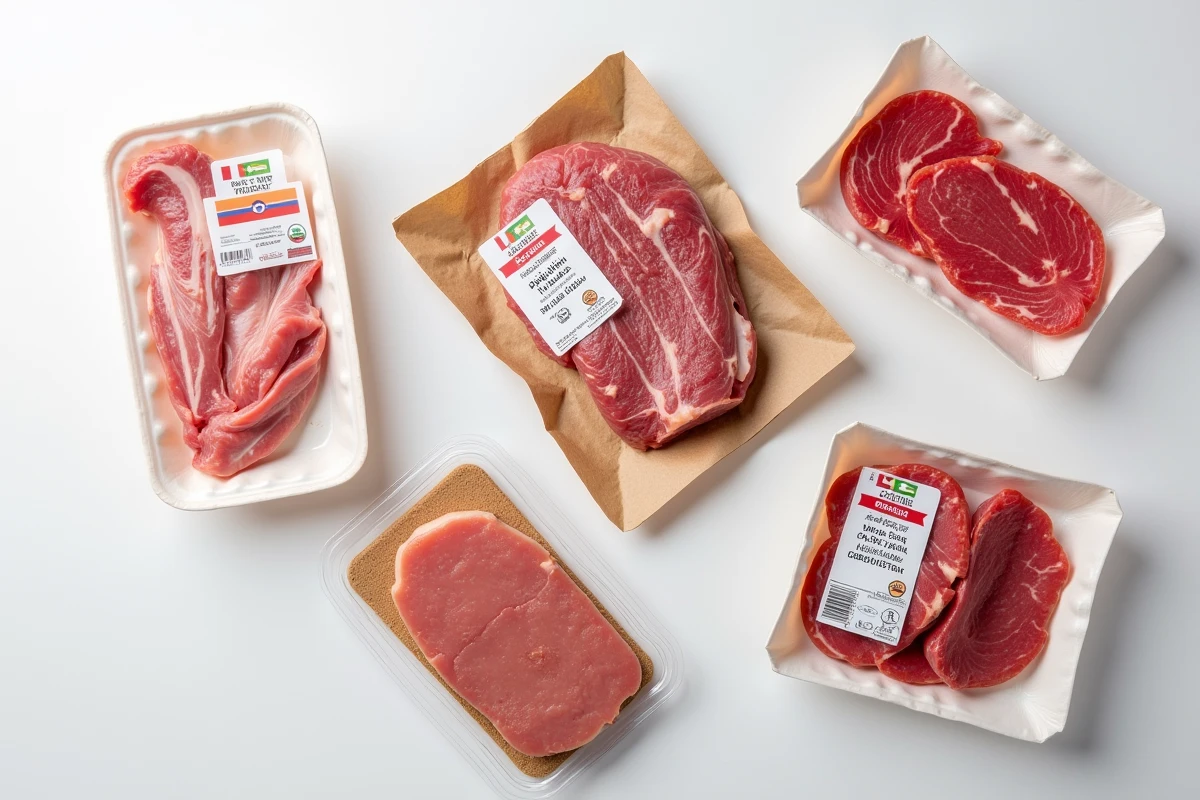
Lidl is regularly challenged by organizations of French farmers regarding the presence of imported meats on the shelves. The criticisms particularly focus on references of Angus beef imported from Ireland or Mercosur countries, highlighted during specific promotional operations.
In Aveyron, farmers denounced the promotion of a “world’s best steak” of Irish origin in Lidl stores, while the company otherwise displays commitments in favor of French supply chains. This type of episode fuels an ongoing debate about the consistency between CSR commitments and actual sourcing practices.
The FDSEA-JA network has conducted in-store actions, particularly in Mayenne, to remove foreign products deemed competitive with local production from the shelves. These mobilizations aim to make visible the gap between the discourse of support for French farmers and the reality of the shelves.
What the label really allows you to verify on the shelf
In the face of these tensions, consumers have a simple but underutilized tool: a complete reading of the label. Three levels of information deserve special attention.
- The country of birth, rearing, and slaughter, mandatory for beef. If all three mentions indicate “France,” the animal has spent its entire life on the territory.
- The ingredient list, which distinguishes a single-ingredient product (meat only) from a processed product containing additives.
- The official logos (VBF, Label Rouge, AB) as opposed to the marketing mentions specific to the brand, which do not have the same regulatory value.
A minced steak “Origin Pyrenees” does not have the same regulatory status as a VBF-stamped steak. The former falls under a voluntary approach by Lidl, while the latter is subject to a specification controlled by third-party organizations. Confusing the two is akin to comparing a commercial promise to a certification.
The traceability of meat at Lidl relies on a solid European regulatory framework, complemented by voluntary commitments whose level of detail remains variable. CSR reports provide a consolidated view, but not granular. The only reliable reflex in-store remains to turn over the tray and read each mention, without relying solely on the name of the range or the visual of the packaging.